 Almost like a new drug, our addiction to using our smartphones is having a profound effect on our brains. Whether we’re texting, posting on Facebook, or playing Angry Birds, the way we’re repetitively using our fingers and thumbs on the smooth surface of a touch screen is causing certain areas of our brains to become bigger. In other words, we’re experiencing heightened brain activity that rewires sensory processing when our fingertips and thumbs are touched, a phenomenon known as “brain plasticity” in which the brain adapts to learning new things.
Optical Illusion. Can You Find All The Y's in the picture?
I found this cool Optical Illusion at Brainden.com You can visit them for much more Optical Illusions and Brain Teasers. S...

Saturday, March 28, 2015
The impact of smartphone thumbing on your brain
Almost like a new drug, our addiction to using our smartphones is having a profound effect on our brains. Whether we’re texting, posting on Facebook, or playing Angry Birds, the way we’re repetitively using our fingers and thumbs on the smooth surface of a touch screen is causing certain areas of our brains to become bigger. In other words, we’re experiencing heightened brain activity that rewires sensory processing when our fingertips and thumbs are touched, a phenomenon known as “brain plasticity” in which the brain adapts to learning new things.Tuesday, December 2, 2014
Epic Mind Trick
It is quite possible to make a correct guess everytime in a number guessing time.
It is not that odd.
For example think of a number from 1 to 10
two, three, four, five whatever,
Now say it out loud in your head.
"Seven, seven, seven," for example.
And the number you thought is nine.
Here's the explanation: Before asking to think of a number notice how the word odd is used in the previous sentence. That gives you an subconscious suggestion to choose an odd number, so you naturally will choose an odd number.
Now, because I mentioned two , three , four , five and seven your mind crossed them off as options.
Which leaves only the numbers nine and one.
Nobody chooses one because it is obvious so the only choice left is 9
It is not that odd.
For example think of a number from 1 to 10
two, three, four, five whatever,
Now say it out loud in your head.
"Seven, seven, seven," for example.
And the number you thought is nine.
Here's the explanation: Before asking to think of a number notice how the word odd is used in the previous sentence. That gives you an subconscious suggestion to choose an odd number, so you naturally will choose an odd number.
Now, because I mentioned two , three , four , five and seven your mind crossed them off as options.
Which leaves only the numbers nine and one.
Nobody chooses one because it is obvious so the only choice left is 9
Friday, August 29, 2014
Tease your Brain!
Tease Your Brain (It’s Good for You!)
 To test your mental acuity, answer the following questions (no peeking at the answers!):
- Johnny’s mother had three children. The first child was named April. The second child was named May. What was the third child’s name?
- A clerk at a butcher shop stands five feet ten inches tall and wears size 13 sneakers. What does he weigh?
- Before Mt. Everest was discovered, what was the highest mountain in the world?
- How much dirt is there in a hole that measures two feet by three feet by four feet?
- What word in the English language is always spelled incorrectly?
- Billie was born on December 28th, yet her birthday always falls in the summer. How is this possible?
- In British Columbia you cannot take a picture of a man with a wooden leg. Why not?
- If you were running a race and you passed the person in 2nd place, what place would you be in now?
- Which is correct to say, “The yolk of the egg is white” or “The yolk of the egg are white?”
- A farmer has five haystacks in one field and four haystacks in another. How many haystacks would he have if he combined them all in one field?
You can find your answers in the link below.
Source: http://morethanaminute.com/tease-your-brain-its-good-for-you
Wednesday, August 27, 2014
Why do songs get stuck in our heads?
Why some tunes lodge in our brain isn't so clear. Anyway there are a few theories.
Can't get a new song out of your head? You've probably got an earworm, which tends to be this little fragment of the song, often the chorus that keeps playing and replaying like it's stuck on the loop of your head. The phenomenon is quite common. A recent study shows that 91% of the people reported having an earworm once a week, while about a quarter of them more than once a day.
Earworms are involuntary and tend to occur in eight seconds but the reason why and what triggers them remain still a mystery. Music cognition research suggests that earworms have something to do with how music affects the brain's motor cortex. When people are listening to music there is a lot of activity in the motor planning area. People are participating even if they are still. Researchers believe an earworm is your brain "singing" and that actually it turns to be that most people find them somewhat enjoyable.
Once an earworm lodges in your psyche, how do you get rid of it? The best method is for people to distract themselves by listening to other music or something that involves language, tackling a crossword perhaps or having a conversation. A second technique is listening to the earworm song itself repeatedly until the earworm is exhausted.
Can't get a new song out of your head? You've probably got an earworm, which tends to be this little fragment of the song, often the chorus that keeps playing and replaying like it's stuck on the loop of your head. The phenomenon is quite common. A recent study shows that 91% of the people reported having an earworm once a week, while about a quarter of them more than once a day.
Earworms are involuntary and tend to occur in eight seconds but the reason why and what triggers them remain still a mystery. Music cognition research suggests that earworms have something to do with how music affects the brain's motor cortex. When people are listening to music there is a lot of activity in the motor planning area. People are participating even if they are still. Researchers believe an earworm is your brain "singing" and that actually it turns to be that most people find them somewhat enjoyable.
Once an earworm lodges in your psyche, how do you get rid of it? The best method is for people to distract themselves by listening to other music or something that involves language, tackling a crossword perhaps or having a conversation. A second technique is listening to the earworm song itself repeatedly until the earworm is exhausted.
Sunday, July 27, 2014

Thursday, June 19, 2014

Friday, June 13, 2014


Sunday, June 1, 2014
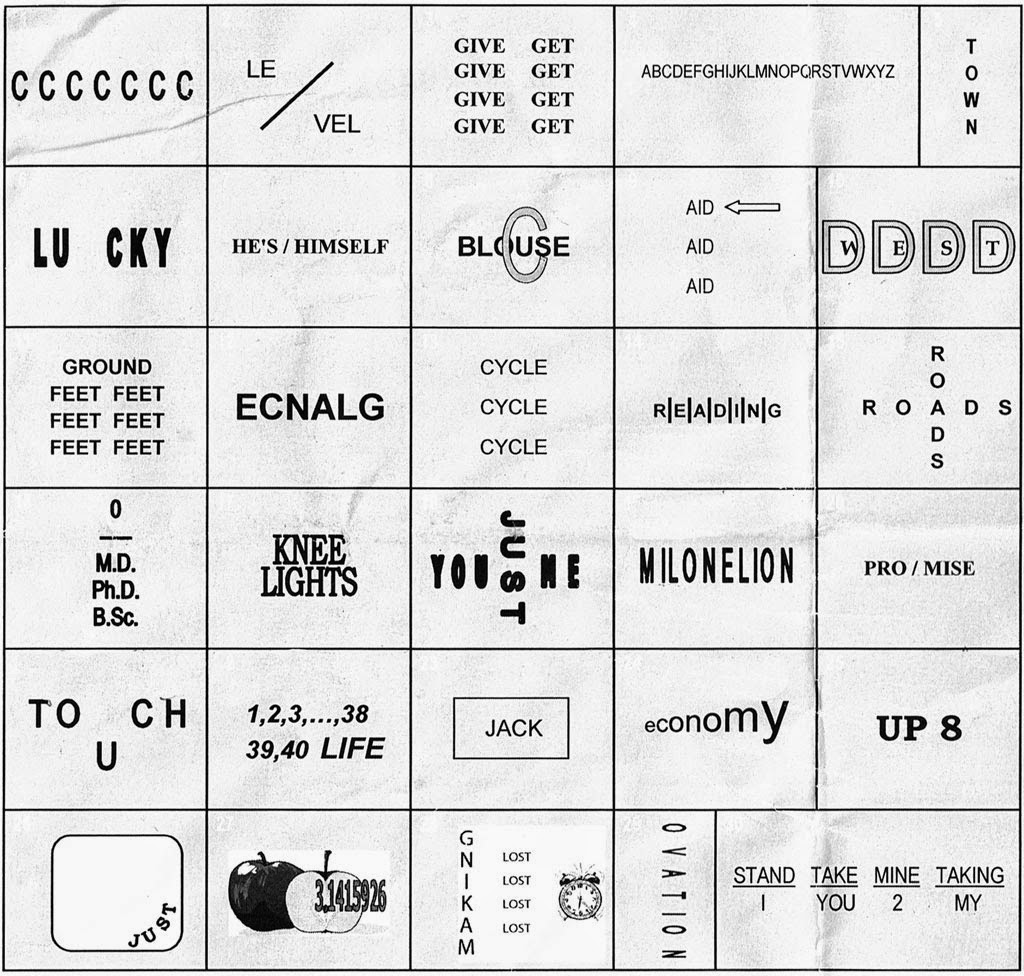
Dingbats
Dingbats are visual word puzzles from which a well known phrase or saying has to be identified. They are derived from the board game that was devised by Paul Sellars. Although similar in concept to the puzzles that were used in TV's "Catchphrase", dingbats generally rely on text rather than pictures, the picture style being more correctly known as a "REBUS".
Sunday, May 25, 2014

Saturday, May 24, 2014

The shadow people mystery.

Have you seen the shadow people?
They creep into our world from the peripheral darkness, often with the malicious intent. For ages, their origins were shrouded in mystery. Some believed they hailed from the immaterial Plane of Shadow, an alien planet or even the future.
The shadow people remain just out of sight, following our movements and even seeking to envelop us. But just who are these dark beings so intent on invading out extrapersonal space?
Saturday, May 10, 2014


Tuesday, April 29, 2014
Why tea is important for the brain?
We all know about the effects of caffeine on the brain, but research has found two more ingredients of tea with important effects…
1. Green tea may help fight Alzheimer’s
Scientists have found that a natural component of green tea may eventually provide a way of curing Alzheimer’s disease.
Early-stage research has found that a component of green tea–epigallocatechin-3-gallate (EGCG)–can disrupt the build up of plaques in the brain, which is what causes the cells to die.Eventually this may help lead to a cure for the crippling disease.
2. Old brains love tea
While we’ll have to wait for the Alzheimer’s research to progress, tea has been shown to have more immediate effects.
A study of 2,031 people aged between 70 and 74 found that those who drank tea–which contain micronutrient polyphenols, like EGCG–had better cognitive performance.Polyphenols are also contained in red wine, cocoa and coffee.
3. Improved cognition
You hardly need me to tell you that tea makes you feel alert, but it’s down to more than just the caffeine…
Tea also contains theanine, a psychoactive amino acid almost unique to tea.Although we know much less about the effects of theanine than we do caffeine, there are multiple studies connecting it with enhanced cognitive performance.
4. That famous calming effect
Not only is theanine responsible for improving cognition, it also provides the famous calming effect of tea.
When theanine is given to people, their brains exhibit more α-waves, which are indicative of relaxation without drowsiness.
5. Tea boosts memory
Theanine, along with EGCG, has also been implicated in improvements to memory.
Korean research has found that green tea extract and L-theanine can produce memory improvements in people suffering from mild cognitive impairments.Mouse studies on EGCG suggest that it helps memory by increasing the production of new brain cells.
6. Better mental health
All the benefits of drinking tea mean it could be a factor in improved overall mental health.
Hozawa et al. (2009) tested this in a population study of 42,093 Japanese. This study found that drinking green tea was associated with less psychological distress.
The same positive effect of drinking tea has been found in 1,058 elderly Japanese people.Theanine has even been tested in the treatment of schizophrenia with some success in reducing anxiety and other symptoms.
Friday, April 25, 2014
How effective are crosswords?
 Many people believe that doing crossword puzzles can keep the brain sharp, and even prevent Alzheimer’s.
But it’s probably not true. Research suggests that while crosswords can form one part of a brain fitness regimen, they aren’t enough by themselves. And a recent study that pitted crossword puzzles against Posit Science brain training found that BrainHQ training improved cognitive function while crosswords seemed to have no positive effects.
Crosswords may help with a brain function called fluency, or word finding. Fluency is a type of process based in the speech and language centers of the brain. But watch out: only crosswords that challenge you can help your brain improve its function. Crossword puzzles that are too easy won’t help—you have to push yourself to the next level to change your brain. And although fluency is an important brain function, it’s just one of many.
Crosswords might not keep you sharp, but they are fun! Try our brain-trivia crossword to see how much you know about the brain. Or, to learn more about research on the effects ofcrosswords vs. brain training, read about this independent, peer-reviewed study in 681 participants.
Subscribe to:
Posts (Atom)